
Providing first world, up-to-date Anaesthesia and Critical Care
The history of BDP (Beck, Danchin, and Partners) is indeed a remarkable journey through the evolution of anaesthesia and healthcare in South Africa. From its humble beginnings in the 1940s with two competing anaesthesia groups in Durban, it's fascinating to see how BDP grew into a leading force in anaesthesia and intensive care.
The two key practices—Dr. Oscar Schmahmann's and Dr. Harry Grant-White's—were foundational in setting the groundwork for modern anaesthesia in Durban. Their work in the 50s, when the tools available were rudimentary compared to today's standards, highlights the resilience and innovation of anaesthesiologists at the time.
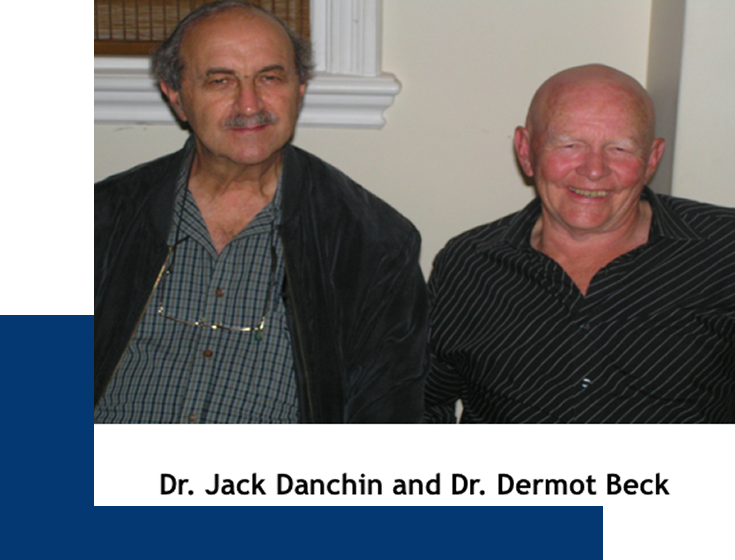
Dr. Jack Danchin and Dr. Dermot Beck
The fact that they had to carry their own equipment, such as reusable endotracheal tubes and blood pressure machines, underscores how much the field has progressed. This era of hands-on, resourceful practice laid the groundwork for modern standards.
It's also interesting to note the evolution of the clinics themselves, from their initial rivalry to the eventual merger in 1971 that led to the formation of the Durban Anaesthetic Clinics. The two doctors, Dr. Sher and Dr. Rogoff, played a pivotal role in making the merger happen in a spirit of collaboration and mutual respect. This was a turning point that set the stage for a unified anaesthetic practice in the region.
By the 1980s and 1990s, BDP had become a leader not only in anaesthesia but also in healthcare innovation, with the establishment of world-class facilities like the Durdoc clinic, Westville Hospital, and Crompton Hospital. The creation of specialized services such as epidural care for pregnant women, intensive care, and chronic pain management marked a new era in patient care.
The addition of heart transplants in 1997 is a huge milestone. That's an incredible achievement in private practice, especially considering how advanced and high-risk these surgeries are.
BDP's commitment to academic excellence, community service, and ethical practice shows a well-rounded approach to both healthcare and social responsibility.
Their involvement in charities and providing services to disadvantaged communities further exemplifies their dedication to improving the lives of others.
This rich history really highlights the deep roots of anaesthesia and intensive care in Durban and South Africa more broadly, and BDP's pivotal role in shaping these fields over the decades.